Moving to Write: Exploring Flow For Narrative Energy

The idea of flow in writing is usually associated with ‘being in the flow’, that wonderful sensation when words and ideas synchronize, when your concentration is totally focused, making you lose all sense of time, when everything seems to come blissfully together.

Movement offers writers a different way of looking at flow.

For example, these two contrasting types of flow give interest and energy to movement and written narrative alike: Continue reading

The Fine Line of Focus

IMG_4819-1What is your favorite writing moment?

Mine has to be when I’m writing in response to a prompt (could be some detail in a story I’m working on or something entirely new) and I feel that special tug. Something has grabbed me, something that intrigues me, that seems meaningful, even if I’ve no idea what exactly or why. All at once I’m alert, curious to see what’s going to happen, energized, happy as a clam on its favorite rock when the tide is in.

Sometimes this happens after I’ve been free-writing, going with whatever wafts through my mind. Other times it happens when I’ve been concentrating on details of the prompt itself.

Once in the flow, both kinds of focus are needed to keep going: Continue reading

Writing Advice From The Sword: What Fencing Can Teach Writers

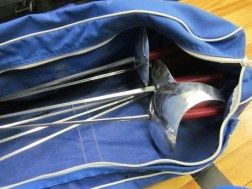
unpacking sabersWhat’s a writer to do when winter just goes on and on and it’s March and there’s still snow on the ground and minus temperatures? Take up fencing.
As a movement artist-educator I’ve always believed that changing and challenging your usual ways of moving is an effective and pleasurable way to energize yourself and boost your creative thinking.

Fencing is certainly making my brain sizzle. And there’s the bonus of getting writing advice too!

1. Don Protective Gear Continue reading

Writing and the Dynamics of Smell

I watched a mother pass sample pots of dry teas to her young son in a local tea store. Oranges, he said, sniffing at the tin his mother held out while at the same time continuing to tease his little brother. Grapefruit. Vanilla. Mint. He got them all. I thought about writing and the sense of smell.

Smell for Narrative Energy

In Edinburgh last year, I was entranced by the installation “It Happens When The Body Is Anatomy Of Time” by Brazilian artist Ernesto Neto in the Scottish National Gallery of Modern Art. The fragrance of spices, cloves, cumin, turmeric, pervaded the room, bringing the visual artwork – lycra ‘skins’, the stitching details, the colour and lighting – alive, and making the installation a sensual and exciting experience. Continue reading

Five Ways To Lift Yourself Out Of A February Writing Slump

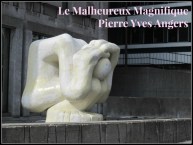
Le Malheureux Magnifique, Pierre Yves Angers

Winter is the traditional time for storytelling but by February many of us story tellers and writers in colder climes are feeling the effects of battling the freezing winds and icy sidewalks of a long, cold winter: hunched, tense shoulders, neck ache, cabin fever.

Here are five suggestions to help you rise out of the slump and re-energize. Continue reading

Towards a Year of Creative Thinking

dancer's shadowSorting through the boxes and folders of lesson plans, lectures and articles I wrote during my years of teaching creative movement and physical theater, I found my notes for a discussion on ‘creative thinking for creative movers’.

A perfect reminder for the beginning of a new year – for movers and writers. Continue reading

Do You Really Want To Know What Your Body Parts Are Saying About You?

finger of Northumberlandia, Lady of the North

When I broke my wrist a couple of weeks ago, two people on the same day warned me to be sure to treat the pain. The body remembers, they told me.

As an ex-dancer I’m a firm believer in body memory. It’s a wonderful feeling to let one’s body take over and remember the movements of a choreography. And who hasn’t moved in a particular way (or smelled or tasted or heard something) and have a previous occasion – where we were and who we were with – leap to mind?

But here’s something very weird: I’m convinced (in retrospect) that a week before I broke my wrist, it saw the future.

Suddenly, out of the blue, Continue reading

Writing (Dancing, Singing…) From The Sole: A Warm-Up Exercise

bare foot on carpet I liked to make sure my little dog Brandy walked on several different surfaces every day – grass, packed earth, tarmac, mud, gravel… Needless to say, people thought I was nuts but I felt the sensory stimulation would keep him lively and perky. He did live to eighteen!

This exercise, based on the same idea, is a great way to ground yourself before any kind of creative work. I particularly like to do it before sitting down to write or when I’m stuck.

You can use any images, words or ideas that came to you during the exercise in your writing (free write, first draft, insert a new image/idea into something you’re already working on). Or you can simply use it to connect with the ‘now’, to be present with yourself and slip away from your controlling inner editor (or any outer editors for that matter). Continue reading

Looking to Write Your Way Out From Your Usual? A Writing Exercise!

Fanny Fanny, a sculpture in welded bronze by César Baldacinni

Fanny Fanny
by César Baldacinni

Feel like it’s time for a change in your writing? Looking for portals that might lead you to different kinds of stories or different styles of writing from your usual? Try this exercise!

The exercise has two parts. The first – how to write this exercise – comes courtesy of Montréal poet Blossom Thom*, the second – the prompt – is from me.

You will need plenty of paper (I’d suggest good sized paper, not an itsy-bitsy notebook), and a pen or pencil.

But first, a warm up to power up both sides of the brain!

Warm Up

Clasp your hands in front of you. Note which thumb is on top. Open your hands and clasp them again, this time with the other thumb on top. Clasp and re-clasp your hands, alternating thumbs on top, as fast as you can.

Now do the same hand clasping exercise behind your back! Faster!

Part 1: Get Ready…

Using pen or pencil, you will write with Continue reading

Breathing to Write 2 – Writing Prompt

Here is the second in my series of movement/breathing/writing exercises.

First the breathing exercise:

  • sitting with your spine tall and away from the back of your chair, and your feet on the floor. Close your eyes. Put your right hand on the right side of your ribcage, left hand on left side. When you breathe in, you should feel your palms move away from each other, and when you breathe out, they come towards each other. Breathe quietly, focusing on this movement. After a while, try breathing only into your right side….only into your left side.
  • If you feel uncomfortable or dizzy when holding your breath in this second exercise, stop and breathe normally. If 4 counts feels too much, try 3. Breathe in for 4 counts (in, 2, 3, 4); Hold for 4 counts (hold, 2, 3, 4); Breathe out for 4 counts (out, 2, 3, 4); Hold for 4 counts (hold, 2, 3, 4). Repeat for a couple of cycles, then breathe normally.

Now the writing:

  • Select one of the following:

in the same breath

with bated breath

breathing down his neck

catching her breath

taking a deep breath

out of breath

holding her breath

under his breath

  • Writing from the prompt you’ve chosen, describe in detail where your character is, what is around him or her. What is the light like? Is it hot or cold? What can the character hear? Who are they with, or are they alone? Is anyone else there that they are not aware of? If so, where is that person in relationship to your character? Let the story emerge gradually.

How did this work for you? I’d love to know. Please let me know in the Comments box below.