Writing Exercise for Narrative Energy: Juxtaposing Multiple Ways a Character Experiences the World

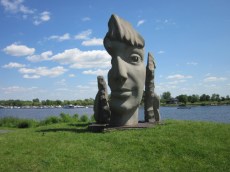
David Moore's 1994 sculpture Site/Interlude, Musée de Plein Air de Lachine

Site/Interlude by David Moore

In life we constantly shift between different ways of experiencing the world – between inner and outer lives, between doing and thinking, dreaming, remembering, talking, between being (in one’s body) and interacting with people, things. We shift between emotions, between judging, enjoying and complaining, between sensing and moving.

Forcing a character to experience similar rapid shifts disrupts linear thinking, often producing Continue reading

Inspiration and Intention: Writing New Stories On The Road.

walking the reflexology labyrinth at Coastal Maine Botanical GardensA change of environment can often work wonders in helping stimulate new ideas, new inspiration, new ways of seeing oneself and the world. New stories too.  Perhaps it’s because a strange place makes one hyper-sensitive to new sights, sounds, impressions… That’s why Continue reading

Thoughts on The Kobo/PressBooks ‘Let’s Get Published’ Workshop

Kobo Writing Life logoThe Kobo/PressBooks ‘Let’s Get Published’ workshop in Montreal was held was in the gorgeous but dilapidated Greek Revival style mansion which was once the home and business headquarters/studios of William Notman (1826-1891), renowned photographer and owner of the largest photographic business in North America in the second half of the 1800s. Continue reading

Word-icise – A Word Workout and Writing Exercise!

The Passing Song, Catherine Widgery, 1992 Musée Plein Air de Lachine

“The Passing Song”
Catherine Widgery

Today’s writing prompt will be an end-of-summer word workout!

1. Start by exercising your fast-twitch word muscles. List all the words you can find within the word given below!  For example: if the word were “greatness”: great, eat, teen, neat, greet, gnat, rent, rest, ten….

2. Then we move to the slow-twitch/endurance word muscles. When you have found all you can, find at least four more. (And then four more?) Go on, are you sure there aren’t more?

3. Worn out? Add in some words which use any letter as many times as you like: trea(t), sten(t). Use real names: Tess, Stan

4. Now the pay off! Start writing, incorporating ALL the words in your list in the order in which they appeared.

The prompt word is:

RESOLUTION

Have fun!

Freedom and Structure in Revising a Story: Matt Bell’s Revision and Rewriting seminar at Grub Street

sculpture Monica (1985) by Jules Lasalle in Musée Plein Air de Lachine

Monica (1985) by Jules Lasalle
Musée Plein Air de Lachine

There I was, with a first draft I loved, a folder bursting with a massive amount of material I’d developed in search of what that first draft was truly about (none of which felt right), and absolutely no idea how to pull my story together or move it forward.

This was not a new experience for me. It always seems to happen with my favorite stories, the ones I feel really invested in, the ones I know have to be finished.

Unless my first draft is short and gives me a clear idea of where it’s going, my attempts to dig deeper into the story end up with me bushwacking my way through tangled undergrowth with no idea of whether I’m heading north, south, east or west. I have more than a few stories floating unfinished on my laptop’s hard drive (on my brain’s hard drive too). I’m not even talking about a novel here, just stories of maybe 2,500-5,000 words.

So – what next? Continue reading

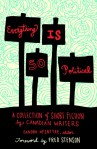
Writing Political Fiction – ‘The Brothers Wolffe’ in “Everything Is So Political”

Everything Is So Political, ed. Sandra McIntyre, Fernwood PublishingI am very proud and excited to have my story “The Brothers Wolffe” included in the recently released anthology “Everything Is So Political” edited by Sandra McIntyre and published by Roseway/Fernwood Publishing.

I didn’t set out to write a political short story. Somehow, that never works for me.

With “The Brothers Wolffe” I was simply writing in reaction to an image on a postcard that I noticed in a café in the UK when I was visiting on holiday.

The postcard showed two men sitting side by side, knees agape, hands on thighs, looking Continue reading

Getting Back On The Writing Track – Off With The Email

The Beach at Montreal's Vieux Port

Beach, Vieux Port, Montreal

I’ve not had a productive summer writing-wise. All sorts of humdrum interruptions cropped up, to say nothing of those sunny summery days that simply couldn’t be spent inside (and I’ve always had trouble writing outside!).

But as the first red leaves warn of fall around the corner, my agenda warns me of upcoming visits through September, October and November. So I better get going and get something written before my guests arrive or I’ll be a surly, resentful hostess.

I’m one of those people who work best with a schedule. I’ve always worked from home (except when actually in a school gym or dance studio) so I’ve been easily available. It took a long time to persuade people that there were now certain hours I was ‘out to lunch’. I had to train myself to let the phone go on ringing (argh, but suppose it’s….).

I need to get back to my writing. To help me focus even more, I’ve decided to turn off my email during my writing hours. August seems the perfect month to do this as anyone with any sense will be beside the ocean or a pool or hiking a trail in some lonesome backcountry, far from electronic communications.

Even so, it’s hard. The first few days I couldn’t resist peeking. I’m getting better though and today I’m committing myself to NO peeking during my writing time. At all. Whatsoever. Even if I have a blank moment and am stumped with my writing. Especially if I have a blank moment.

So just one last check now, and then I’ll close my emails down. I will.

What do you do to get yourself back on track?

Writer Watching Water

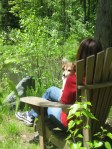
sitting watching waterI love being beside water. Before going to the ocean, lake, river, pond or stream, I imagine myself sitting on the beach or bank, writing page after page after page, diving at last beneath the surface of the story I’ve been working on, discovering at last its deep secret, or maybe getting caught up into the flow of a new story.
The truth is, I rarely write a word when I’m near water. I just sit, and look.

But that’s OK. Sometimes that’s exactly what a writer needs to do…sit and watch water.

How To Enjoy Talking About Yourself As A Writer

sculptures by Almut Ellinghaus

© Almut Ellinghaus

Once you’ve actually managed to say “I’m a writer” to people, the next step is to answer questions about your writing and yourself as a writer. It’s not always easy for a writer, or any artist, to talk about themselves or their work. I certainly find it very difficult and could often kick myself for being so awkward. I’m not thinking here about a hard sell, or about persuading a publisher to buy your book, but simply enjoying sharing your writerly self with anyone who shows a friendly interest. Continue reading

Playing With Words: Sentence Experiments – Writing Exercise

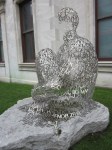
Shadows II by Jaume Plensa MMBA on loan from Georges Marciano

Shadows II by Jaume Plensa
MMBA on loan from Georges Marciano

Nothing perks up a piece of prose – and a writer – more than playing around with sentence structures.

A fun exercise I especially enjoy is to take a sentence that feels totally alien and try to write my own sentence in exactly that same style. Why? To surprise myself. To kick myself out of my same old same old ho-hum sentence habits. To discover new rhythms.

“I’m playing with words” Virginia Woolf

The Exercise Continue reading