One Core Essential Of Narrative Energy, And A Writing Exercise

man dancing with feathersYesterday, at the National Arts Gallery in Ottawa, we were walking up the ramp along the glass wall to the galleries behind two young boys with their mother.
An elderly, very smartly dressed couple started down the ramp. The man stopped as he and his wife were about to pass the boys. He leaned towards them. Pursing his lips, he started to Continue reading

Back-Story and Writing Forward

I treasure the stories I fall in love with, not only as a reader, enjoying them for the terrific stories they are, but also as a writer, trying to learn from them by working out the secret of their magic.

My most recent love is “Reception” by Nona Caspers that appears in the Spring 2013 issue of The Kenyon Review.

There are a whole slew of reasons why I fell for this story: the striking image at the beginning, the way every detail echoes and reverberates with other details, the oddness of the details and images, the beautiful, clever ending that both illuminates the narrator’s experience and goes beyond it. But I especially love it for the pointers it gives me about back-story and writing forward. Continue reading

Published? You Deserve It!

I received a lovely email from a friend congratulating me on a publication. Great news, he wrote, you deserve it.

I deserved being published? Why? What had I done to deserve it? Continue reading

11 Steps to Preparing to Read Your Story in Public

Has your mind ever wandered while listening to a public reading?

As a kinesthetic and visual learner, I sympathize with how difficult it can be for some people to stay with a text being read out loud by another person, even if it is a story and not a lecture. Understanding this makes me prepare extra carefully for public readings.

Here is the checklist I use: Continue reading

A “Real” Writing Prompt

Flipping though some of my old journals the other day, looking for inspiration, a paper napkin fell out. The words scribbled on it were in the handwriting and distinctive blue ink of my Advisor in the Lesley University MFA in Creative Writing, Brian Bouldrey (The Sorrow of the Elves, The Honorable Bandit). I can’t actually remember what we were talking about when he wrote those words down, but three or four years later, I found them a fun writing prompt and thought you might enjoy them too.

Once you start, don’t stop for twenty-five minutes, using the following however you like:

  • real eyes
  • realize
  • real lies

Let me know how it goes!

Breathing to Write 2 – Writing Prompt

Here is the second in my series of movement/breathing/writing exercises.

First the breathing exercise:

  • sitting with your spine tall and away from the back of your chair, and your feet on the floor. Close your eyes. Put your right hand on the right side of your ribcage, left hand on left side. When you breathe in, you should feel your palms move away from each other, and when you breathe out, they come towards each other. Breathe quietly, focusing on this movement. After a while, try breathing only into your right side….only into your left side.
  • If you feel uncomfortable or dizzy when holding your breath in this second exercise, stop and breathe normally. If 4 counts feels too much, try 3. Breathe in for 4 counts (in, 2, 3, 4); Hold for 4 counts (hold, 2, 3, 4); Breathe out for 4 counts (out, 2, 3, 4); Hold for 4 counts (hold, 2, 3, 4). Repeat for a couple of cycles, then breathe normally.

Now the writing:

  • Select one of the following:

in the same breath

with bated breath

breathing down his neck

catching her breath

taking a deep breath

out of breath

holding her breath

under his breath

  • Writing from the prompt you’ve chosen, describe in detail where your character is, what is around him or her. What is the light like? Is it hot or cold? What can the character hear? Who are they with, or are they alone? Is anyone else there that they are not aware of? If so, where is that person in relationship to your character? Let the story emerge gradually.

How did this work for you? I’d love to know. Please let me know in the Comments box below.


Surfing the Narrative Wave (part 1)

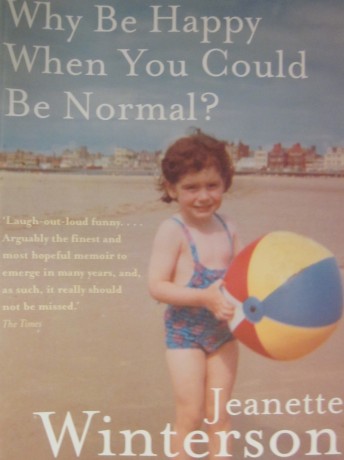
cover of Why Be Happy When You Could Be Normal by Jeanette Winterson

I am trying to read Jeanette Winterson‘s autobiography “Why be Happy When you Could be Normal?” as slowly as I can in order to enjoy it for as long as possible. But it’s not easy. As I read, I feel as I though I’m on a surfboard, being carried along by a massive wave. Once I start reading, there’s no stopping.

How does Winterson create this narrative surge? Continue reading